Microservices (GKE)
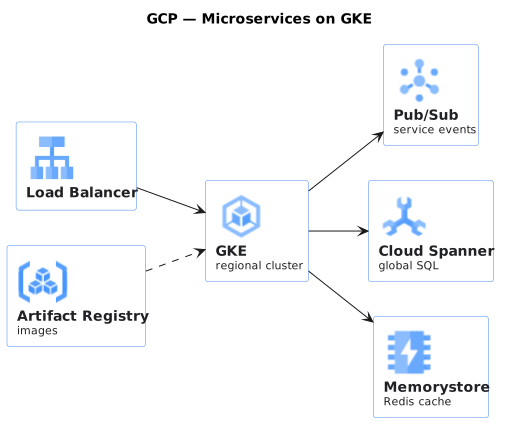
GKE with a load balancer in front. The heavier option, and sometimes the right one.
- Format.puml
- Length26 lines
- LibraryGoogle Cloud icons
The source
26 lines of PlantUML, and pulls in Google Cloud icons. Copy it, or open the template inside Gnomon and render it as it is.
@startuml
!include <gcp/GCPCommon>
!include <gcp/cloud_load_balancing>
!include <gcp/google_kubernetes_engine>
!include <gcp/artifact_registry>
!include <gcp/pubsub>
!include <gcp/cloud_spanner>
!include <gcp/memorystore>

title GCP — Microservices on GKE

left to right direction

GCP_CLOUD_LOAD_BALANCING(lb, "Load Balancer")
GCP_GOOGLE_KUBERNETES_ENGINE(gke, "GKE", "regional cluster")
GCP_ARTIFACT_REGISTRY(ar, "Artifact Registry", "images")
GCP_PUBSUB(ps, "Pub/Sub", "service events")
GCP_CLOUD_SPANNER(sp, "Cloud Spanner", "global SQL")
GCP_MEMORYSTORE(ms, "Memorystore", "Redis cache")

lb --> gke
ar ..> gke
gke --> ps
gke --> sp
gke --> ms
@enduml
Render this offline
This template ships in Gnomon and renders on your machine, with no account and nothing sent to a server. The browser editor is free and needs no install.
Others in Google Cloud architecture diagrams
- Simple ArchitectureLoad balancer, compute, database. The shape most projects start as.
- VPC NetworkingDNS, CDN and the network edge. Draw this when latency or egress is the question.
- Serverless ArchitectureAPI Gateway and Cloud Run. Scales to zero, which is the whole argument.
- Data PlatformPub/Sub into Dataflow. The pipeline shape, where ordering and replay matter.
- CI/CD PipelineCloud Build and Artifact Registry. The path from commit to running service.