Servers, firewalls, users and devices, for the diagram everyone still needs.
The Microsoft Office icon set: workstations, servers, firewalls, clouds and people. Unfashionable, and still the fastest way to draw the diagram an auditor, a network engineer or a non-technical stakeholder expects to see.
Not every architecture question is about software. Sometimes the answer is that the thing sits in a rack behind a firewall, and that is worth drawing plainly.
When to use these
Infrastructure and network shapes, where a C4 container diagram would be the wrong level.
Talking to people outside engineering, who read these icons without being taught them.
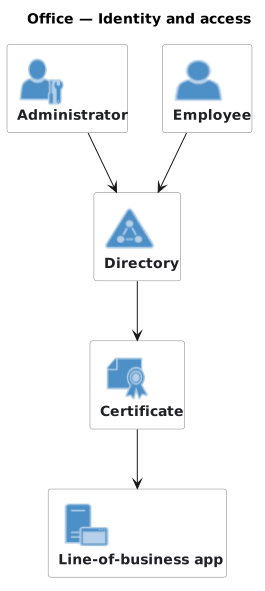
Documenting endpoints, identity and physical placement for a compliance review.
When not to
Anything about the code. These icons describe hardware and estate, not software structure.
Cloud-native designs, where the vendor icon set is the expected one.
Common mistakes
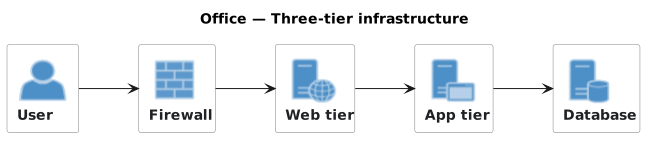
The trap is nostalgia: reaching for a three-tier infrastructure diagram to describe something that is actually a set of managed services. Draw what is there, not what infrastructure diagrams usually look like.
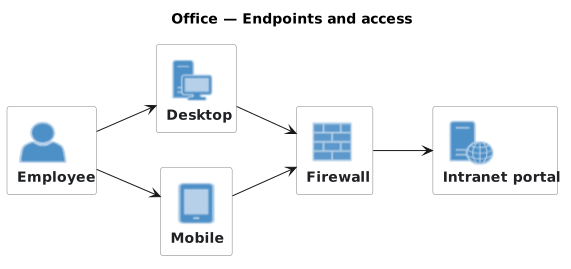
Workstations, phones and how they get in. The device side of access.
Show the source
@startuml
!include <office/OfficeCommon>
!include <office/Devices/workstation>
!include <office/Devices/cell_phone_generic>
!include <office/Concepts/firewall_orange>
!include <office/Servers/web_server>
!include <office/Users/user>

title Office — Endpoints and access

left to right direction

OFF_USER(user, "Employee")
OFF_WORKSTATION(pc, "Desktop")
OFF_CELL_PHONE_GENERIC(phone, "Mobile")
OFF_FIREWALL_ORANGE(fw, "Firewall")
OFF_WEB_SERVER(portal, "Intranet portal")

user --> pc
user --> phone
pc --> fw
phone --> fw
fw --> portal
@enduml
Every template here ships in Gnomon and renders on your machine, with no account and nothing sent to a server. The browser editor is free and needs no install.